
HOW WE DO IT
Red Bridge: A Unique Model
To address the needs of a specific task or project, Red Bridge customizes a distinct team of professionals, selecting those from our network who are best qualified to meet the client’s vision, goals and objectives. Red Bridge project managers then ensure that this bespoke team works seamlessly with the client and its partners, adding capacity that enables a project’s success. We do this by organizing key client and partner leadership and their staff into multidisciplinary project teams, then embedding Red Bridge experts within each team. In this position of leadership and oversight, Red Bridge leadership serves as “general contractor” to direct and oversee all phases of the project, facilitating among the project consulting team, the community and the client.
EXAMPLE
Trails Forever at Point Reyes
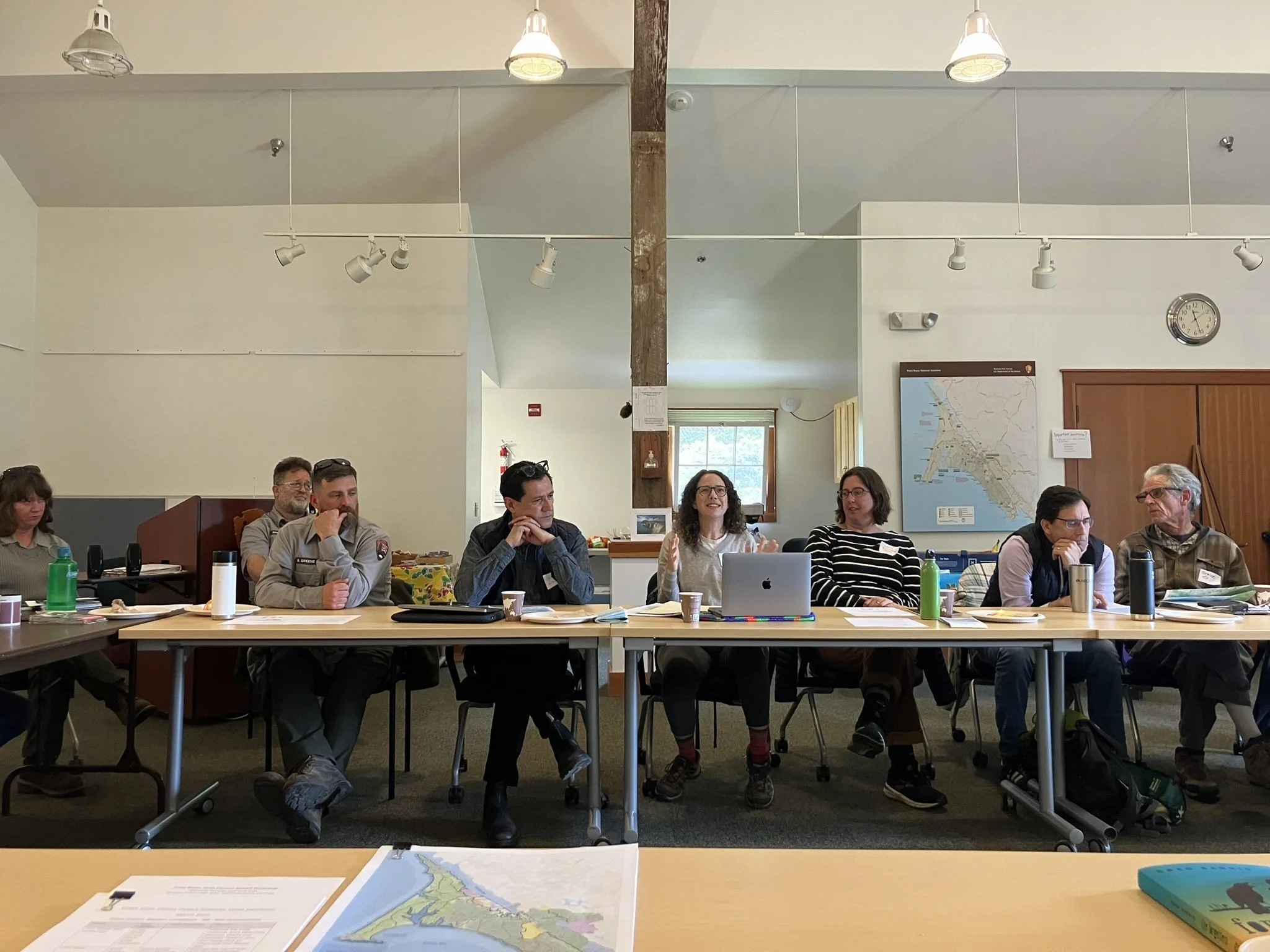
In our ongoing trail planning work at Point Reyes National Seashore, Red Bridge professionals work closely with the leaders and staff of a three-way partnership—NPS, the Federated Tribes of Graton Rancheria, and Point Reyes National Seashore Association—within a structure of three strategic teams. The Trail Design Team comprises representatives of all three partners along with RBG trail designers, landscape architects, and accessibility experts. Meanwhile, the Communications and Community Engagement Team includes RBG specialists to work with park and partner leadership, laying groundwork for the initiative’s outreach and messaging. Finally, the Funding and Fundraising Team matches RBG team members knowledgeable in park financing with leadership at PRNSA, the park’s fundraising partner.
The Red Bridge Approach
EXPERIENCE
Red Bridge is a consulting team that supports public agencies, nonprofits and their partners in achieving their loftiest public-serving ambitions. Our group is made up of individuals and organizations and has more than three decades of experience managing conservation and preservation projects across the country. RBG has been instrumental in planning and implementing projects that transform beloved landscapes. We have helped to build local, state and national park trails, rehabilitate and reuse historic sites, build LEED-certified public facilities, and rejuvenate rural and urban landmarks. We are privileged to have been partners in restoring popular public places, such as Crissy Field and Lands End in San Francisco, and in transforming military bases into parks and public spaces as at the Presidio and Fort Baker in Marin. We have worked with parks from the high profile and iconic, such as Yosemite and Alcatraz Island, to the intimate and idyllic, like Weir Farm National Historic Park. We address a wide range of challenges at every scale, from advising emerging park partner organizations to examining NPS system-wide employee housing solutions.
INNOVATION
Red Bridge is energized by big, audacious ideas and exploring new ways to achieve them. We thrive on innovation to create public spaces, build structures, welcome and engage the public, and coordinate a collaborative process. We seek out new concepts and programs to help our clients to fulfill their project goals. We bring this fresh approach to the important job of managing multiple stakeholders-–finding new avenues to reach public agencies, community members, nonprofit partners, volunteer boards of directors, philanthropists, and elected officials. Our sense of innovation extends to funding; we understand the expense in transforming these places and are experienced in mission-driven economic development models.
LEADERSHIP
Red Bridge realizes that projects of this complexity require coordinated strategies to realize their full potential. The process of envisioning, planning and implementing big transformation is intricate and iterative, requiring leaders who understand the big picture as well as the component parts that will lead to a successful outcome. President Cathie Barner, Executive Vice President Naomi Porat, and the Red Bridge project management team are skilled at bringing together the right interdisciplinary team of experts and coordinating their contributions to the project.
Our Core Values
Community Engagement. We embrace community participation in all our projects and empower the end users to help develop the final product. For example, team trail designers and consultants led a robust community engagement program at Golden Gate National Parks that resulted in the Bayview-Presidio Park Shuttle program, transporting residents of a historically underserved San Francisco neighborhood to their national parks. The Red Bridge Team has worked with clients to develop community engagement plans from coast to coast: from the trails at Point Reyes National Seashore to the park prescription programs of Prescribe Outside in Philadelphia.
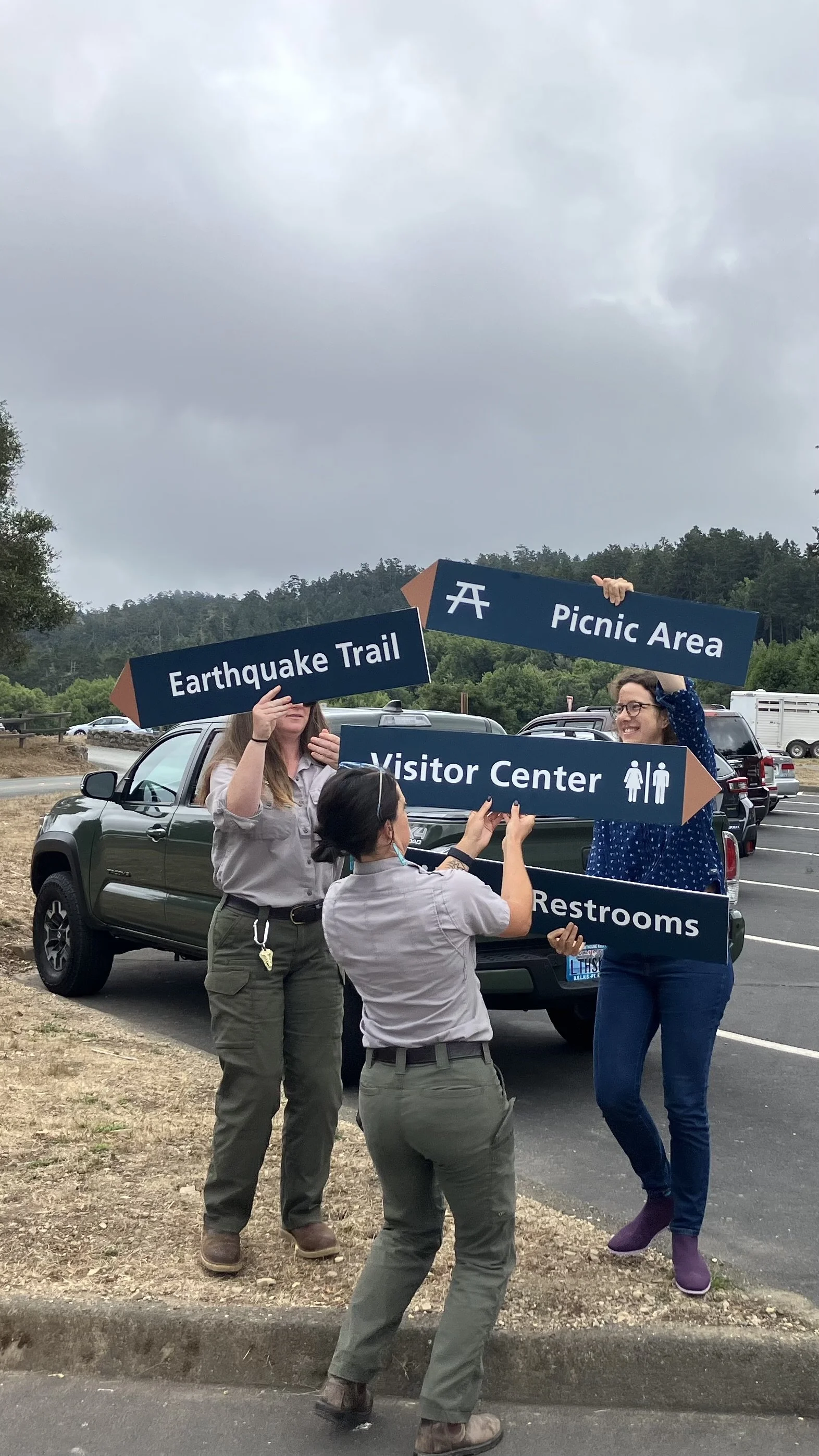
Communication. We believe effective communication makes our goals achievable, whether internally or with the greater public. All team members consider professional, timely communication to be critical to success. In communicating publicly, the team uses a broad range of innovative techniques, from strategically conceived and well-designed signage and printed materials, to electronic media and online content, to “Art in the Parks” installations and happenings. Through these means, we are adept at telling park stories and reaching diverse and underserved communities.
Welcoming All Visitors. We are committed to creating places that are accessible and relevant to all audiences, including those communities who have felt excluded from a park experience. For example, at the Crissy Field Center we engaged youth from underserved communities to become a new generation of park leaders. We are also committed to honoring diverse legacies through our interpretive programs, as we did when partnering with members of Native communities to bring histories to life at Crissy Field, the Presidio, Lands End and Boston Harbor Islands.
Partnerships & Constituency Building. Red Bridge is actively involved with public and private partnership groups that support parks, natural areas, historic sites, regional trail systems, greenway networks and river corridors. We believe that partnerships and constituency building across communities and cultures are essential parts of the planning process. An example from our current portfolio is The Aquatic Park and Pier Project, which attracts and builds on partnerships with neighboring nonprofit groups including the Fort Mason Center for Arts + Culture.
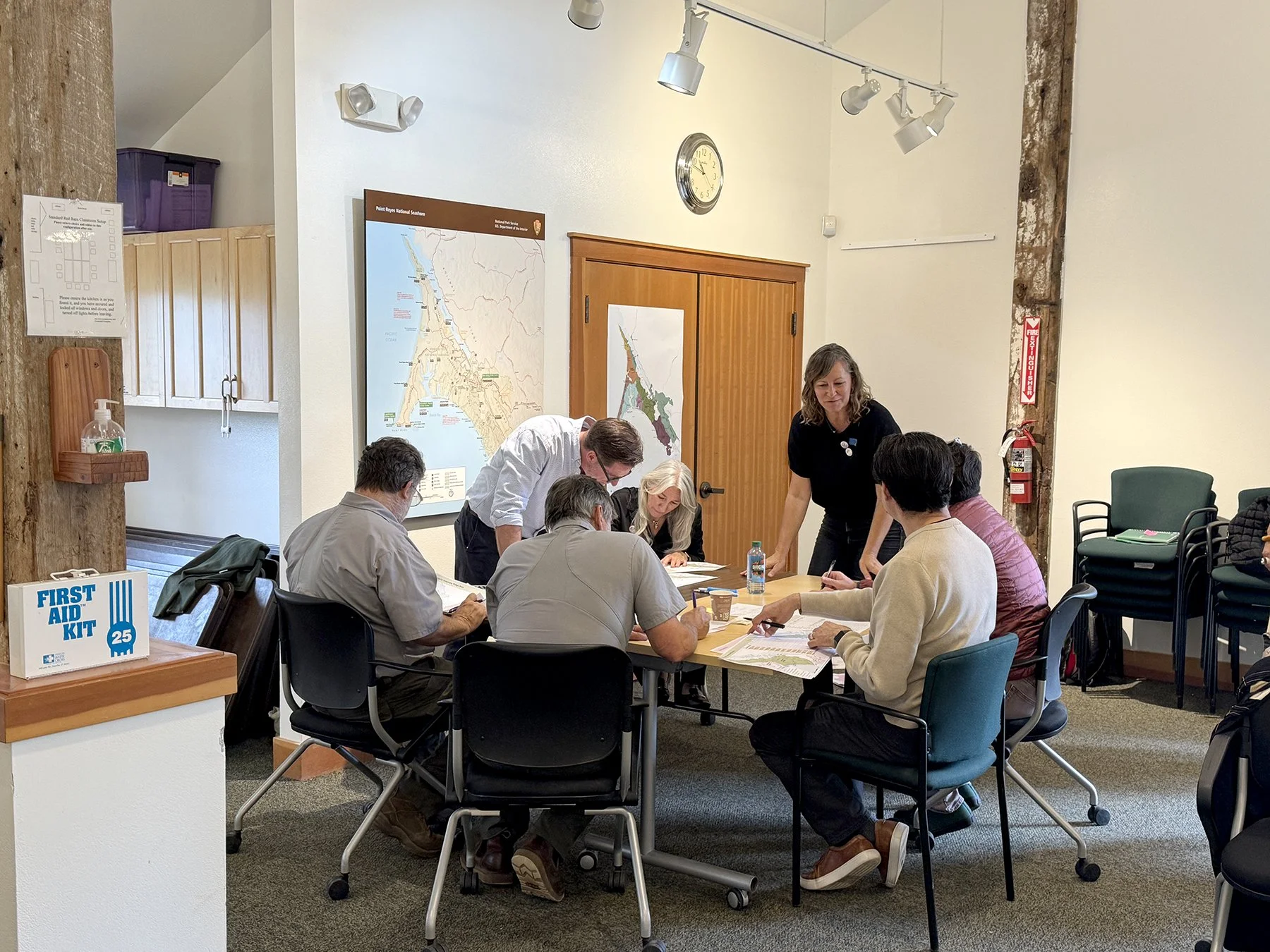
Collaboration. Red Bridge’s commitment to collaborative processes begins with our model for strategically structured interdisciplinary teams. We understand that the right people must be at the table—from visioning to planning, design and execution. This approach broadens to public planning and outreach; collaboration among agency leaders, their partners, local governments, interest groups, and community members leads to results that are durable and supported by all. Red Bridge team members employ a collaborative approach in all projects and, when appropriate, make targeted use of communication channels to include all constituents and enable decisions based on a common body of knowledge.
Getting Things Done. We are creative, innovative and analytical. We value agility, resilience and adaptability and we strive to respond as the needs of places and communities shift in today’s complex world. Our team members and contributors have worked for or with the National Park Service, the Trust for Public Land, the National Trust for Historic Preservation, state parks and nonprofit partners throughout the country. We have lifetimes of knowledge in planning, design, engagement and communications for land conservation and public land use in natural and culturally sensitive areas. We are experienced in working with community-led projects in a diverse range of settings, from rural to highly urban.
Design Excellence.
Underlying our core values is constant attention to quality design. No matter what the assignment, design excellence is foremost in our minds as we work to create welcoming and enjoyable places.
Team members have won numerous design awards from AIA, ASLA, National Trust for Historic Preservation as well as many local, state and national organizations. Here are a few:
The San Francisco Chronicle named the Lands End Lookout Public Building of the Year in 2012 and one of the Best Buildings of the Decade in 2019.
The National Trust for Historic Preservation awarded its 2009 National Honor Award for Rehabilitation to Cavallo Point – the Lodge at the Golden Gate for the rehabilitation and adaptive reuse of the former military base, Fort Baker, into a sustainable lodge and convening site for environmental groups.
The American Institute of Architects, San Francisco Chapter bestowed its Special Achievement Award to the restoration of Crissy Field in 2005.
Expertise
Among our areas of expertise are the following.
Architecture
Communications strategies and outreach to diverse audiences
Community-based landscape scale conservation
Creative compliance planning and environmental document production
Cultural Landscape Planning
Economic planning and financial modeling
Ecological restoration
Engineering
Fundraising strategies and grant writing
Government relations
Heritage tourism and recreational enterprise development
Interpretive planning, storytelling and exhibit design
Landscape architecture and land use planning
Master planning
Natural and cultural resource preservation and restoration
Organizational development
Outdoor recreation planning and implementation strategies
Public engagement strategies and implementation plans
Public-private partnerships to support planning and stewardship of public places
Site furnishings and architectural features guidelines
Trail and open space design concepts, construction documents and details
Volunteer programming and engagement
Wayfinding and visitor information
Youth education and programs that engage diverse and hard to reach communities

“Assertive and inviting at once, the compact structure commands one of San Francisco’s best sites—a cliff above the ruins of Sutro Baths, up from the Cliff House with a forested backdrop on three sides. The architectural response is tough rather than meek, and it enriches a location that already is one-of-a-kind… The siting, the materials, the design philosophy—all are attuned to a remarkable urban encounter with the natural forces that still shape this region. ”
John King
San Francisco Chronicle
January 2020